Loading...
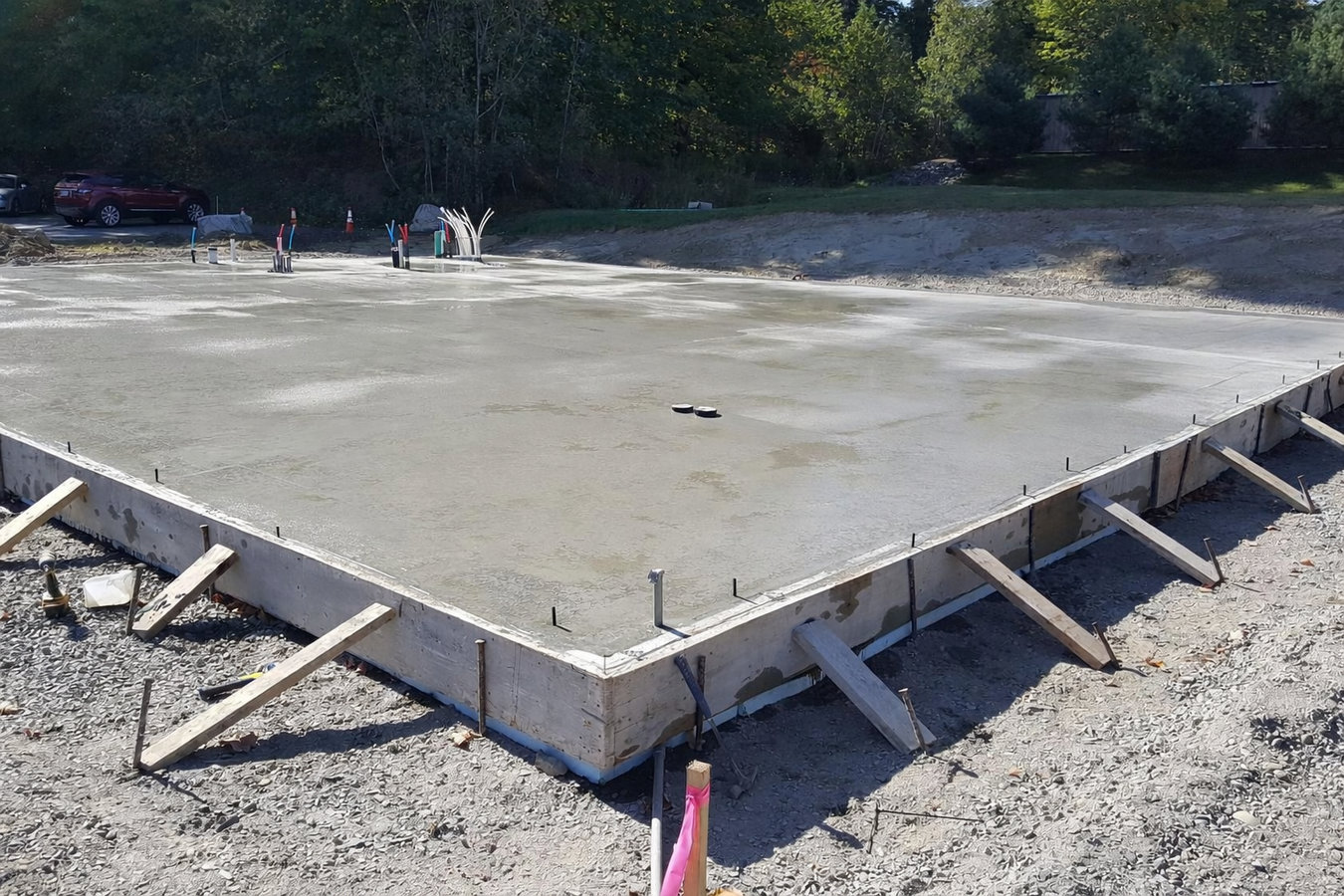
Starting a new garage, addition, or structure on bare ground? We pour slab foundations in St. Cloud sized to local frost depths with proper drainage and steel reinforcement.
Slab foundation building in St. Cloud, MN involves grading and compacting the site, installing any underground plumbing or conduit, placing steel reinforcement inside wood forms, and pouring the concrete in a single day - most residential projects move from site prep to a walk-ready surface in about one to two weeks, with full strength reached after a 28-day cure.
Most homeowners come to us at the start of a new build - a detached garage, a room addition, or a workshop on their lot. Slab foundations are one of the most common starting points for new construction in the St. Cloud area because they are straightforward to build on level ground and suit single-story structures well. What makes them different here than in other parts of the country is the frost depth: the thickened perimeter edges of your slab must extend well below the depth where the ground freezes, which requires more concrete and more planning than a warmer-climate pour.
Homeowners building on a slab often need concrete footings for posts or columns as part of the same project - both require the same frost-depth planning, and combining them saves a mobilization trip.
The most straightforward sign is that you have a detached garage, workshop, addition, or accessory building planned and there is currently nothing but soil where the floor needs to be. A slab foundation is often the right choice for these structures in St. Cloud. If you are breaking new ground on any project, a slab pour is likely the first conversation to have.
Small hairline cracks are common and mostly harmless. But if you see cracks wider than a quarter-inch, cracks where one side has risen higher than the other, or cracks that have visibly grown over time, the slab may be moving. In St. Cloud, this is often linked to frost heave or clay soil expanding and contracting with moisture. Waiting makes the movement worse.
If doors that used to open smoothly now drag on the floor or stick in the frame, the slab underneath may have shifted. This happens when soil settles unevenly or frost heave pushes part of the foundation up. It is one of the earliest visible signs of slab movement, and it is worth having a contractor look before things get worse.
Some older St. Cloud homes have additions or attached garages with dirt floors or deteriorating crawl spaces. If you want to convert that space into a finished room, laundry area, or workshop, a new slab pour is typically the first step. Concrete gives you a stable, moisture-resistant base that a dirt floor cannot provide.
Every slab project starts with a site visit to assess soil conditions, access for concrete trucks, and any underground utilities that need to be marked or routed. We handle the building permit with the City of St. Cloud, coordinate the required inspections, and manage the schedule around the weather window. On-site, we excavate, grade, compact the subbase, lay gravel, install any plumbing or conduit beneath the slab, set the wood forms, place steel reinforcement, and pour. We apply a curing treatment after the pour and protect the surface while it gains strength.
Some projects involve more than just the main slab. When a garage or workshop needs posts, piers, or columns, we combine the slab with our foundation installation service so the entire structural base is built to the same frost depth and drainage standard. This matters in St. Cloud because two separately built structures on the same lot that move at different rates will create gaps, cracks, and alignment problems over time.
Best for homeowners building a new detached garage or accessory structure on their property and need a properly permitted, frost-depth slab as the starting point.
Right for homeowners adding a room, workshop, or shed foundation to their existing property, where the new slab needs to be built to match or connect with what is already there.
Suited for properties where an existing slab has cracked, heaved, or settled to the point where patching is no longer practical and a full pour over a new prepared base is the right solution.
A good fit for older St. Cloud properties with unfinished spaces on bare dirt that the homeowner wants to convert into a usable, moisture-resistant concrete floor.
Central Minnesota has one of the deepest frost lines in the continental United States - roughly 42 to 48 inches in a hard winter. That single fact changes how every slab in this region must be built. The thickened perimeter edges that carry your wall loads need to reach below that depth, which is significantly more concrete and labor than you would need in a warmer state. Contractors who built slabs in milder climates and then moved here have made expensive mistakes on exactly this point. The Minnesota Department of Labor and Industry sets the frost depth standards that local building departments enforce, and we build to those requirements on every project.
St. Cloud also sits on glacial till soils - clay, sand, and gravel mixed together by ancient glaciers. Clay-heavy spots hold moisture and expand when wet, which can push against and under a slab if drainage is not managed at the design stage. We assess your specific lot before ordering a yard of concrete, not just assume the ground is fine. Homeowners in Waite Park and Sartell deal with the same soil and frost conditions, and we bring that same site-specific approach to every project in the region.
We will ask about your structure, lot size, and timeline, then schedule a free site visit. We assess soil conditions, truck access, and any underground utilities before providing a written estimate - no surprises on scope or cost.
We apply for the City of St. Cloud building permit and give you a start date once it is approved - typically a few business days to two weeks. We reply to all inquiries within one business day and keep you updated throughout the permit process.
We excavate, grade, compact the subbase, install gravel, route any plumbing or conduit, build the wood forms, and place steel reinforcement. This prep work typically takes one to two days and is the most important phase for long-term performance.
The pour typically takes a few hours. We apply curing treatment and coordinate the city inspection. You can walk on the slab within 24 to 48 hours, but framing should wait several days - we will tell you exactly when each phase is ready.
Free site visit, written estimate, and we pull the City of St. Cloud permit. No surprises on cost or scope.
(320) 426-1386Every slab we pour has thickened perimeter edges that reach below the 42-to-48-inch frost line specific to central Minnesota. This is not a generic standard - it is what separates a slab that holds from one that cracks after the first hard winter.
We pull the required City of St. Cloud building permit and coordinate all inspections. You never have to navigate city hall yourself, and you get the peace of mind of knowing a city inspector - not just us - signed off on the work.
St. Cloud sits on glacial clay soils that shift with moisture. We evaluate your specific lot and address any drainage or compaction issues before the pour - not after the fact. The Portland Cement Association recommends thorough subgrade assessment for any slab installation, and we follow that practice on every job.
Your written estimate covers site prep, materials, labor, and permit fees before any work begins. If something unexpected comes up during the dig, we talk to you before spending a dollar more - not after the invoice arrives.
Our slab work is grounded in what actually holds up in central Minnesota winters, not what works in a warmer climate. Every project we take in the St. Cloud area is built with the frost depth, soil conditions, and short construction season in mind from the first site visit forward.
Full residential foundation installation for new homes and major additions, including excavation, forming, waterproofing, and backfill.
Learn more about Foundation installationPoured concrete footings for posts, columns, and structural supports built below the frost line to prevent movement.
Learn more about Concrete footingsSpring construction slots fill fast in central Minnesota - contact us now to lock in your pour date before the schedule fills up.