Loading...
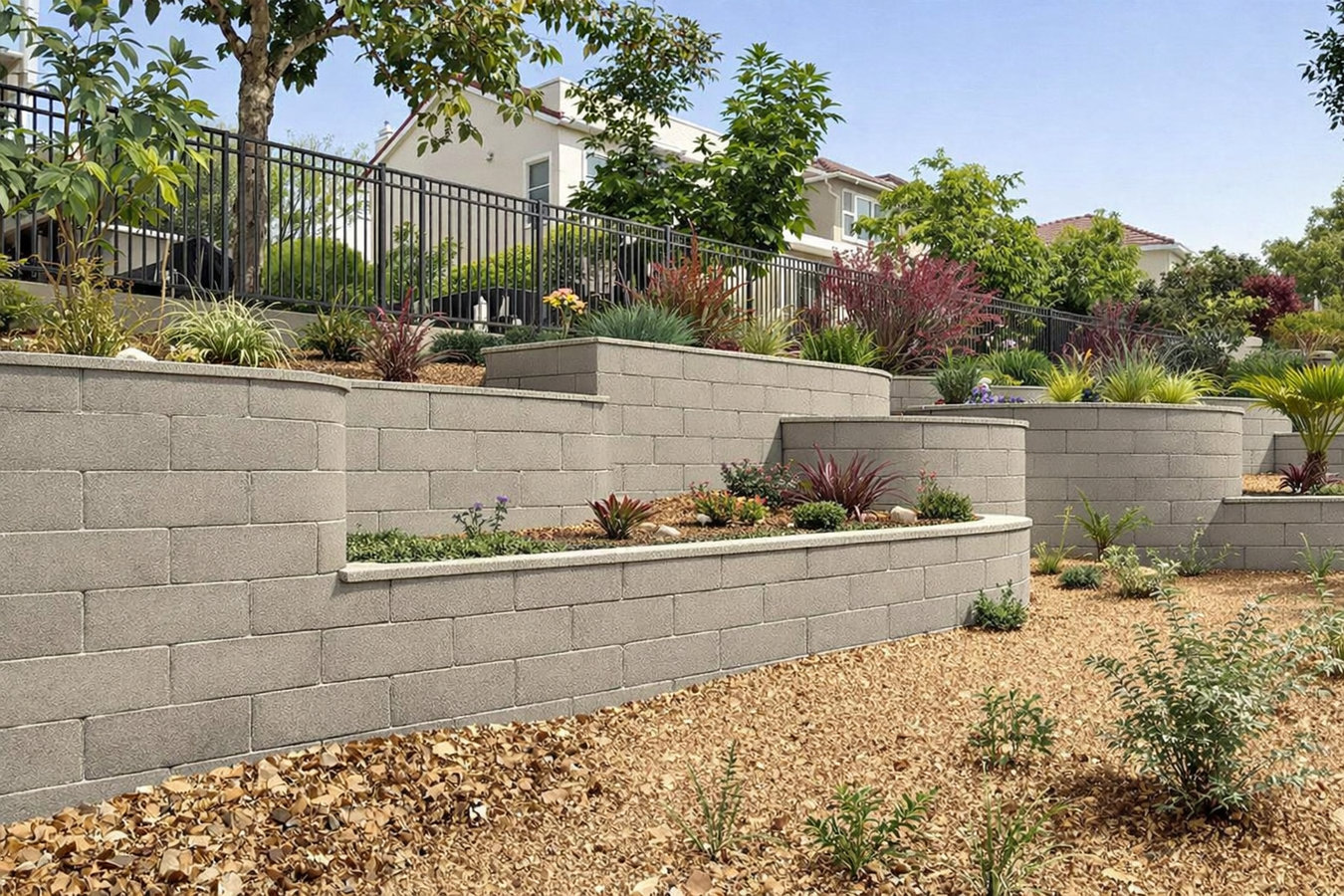
Sloped yard losing soil after every rain? We build concrete retaining walls in St. Cloud with frost footings and proper drainage so your yard stays where you put it.
Concrete retaining walls in St. Cloud, MN hold back soil on sloped lots using poured concrete or concrete block set on a footing below the frost line - most residential walls take two to five days on-site and are ready for backfill and planting within a week of completion.
Most homeowners reach us after a slope has started eroding, an older timber or block wall is visibly leaning, or they are adding a patio or driveway on a sloped lot and need something to hold the cut edge of soil. Concrete retaining walls in St. Cloud have to deal with two problems that warmer states do not: a frost line that runs 42 to 48 inches deep, and clay-heavy glacial soils throughout the Stearns County area that hold water and push against walls when saturated. Both of those factors have to be built into the design, not added as an afterthought.
Homeowners adding outdoor living space alongside a retaining wall often look at our concrete floor installation service, which handles the level surfaces - patios, pads, and interior floors - that pair with a wall to create a complete usable outdoor area.
If bare patches, ruts, or small gullies form on a sloped part of your yard after a heavy rain, the soil is eroding. St. Cloud gets significant spring rainfall and snowmelt, and slopes without support lose topsoil quickly. A retaining wall stops that cycle before it reaches your foundation, driveway, or a neighbor's property line.
If an older timber, block, or concrete wall is visibly tilting away from the slope it is holding, the wall is under stress it can no longer handle. This is especially common in St. Cloud homes built in the 1970s and 1980s, where original timber walls have rotted or block walls were never properly drained. A leaning wall does not fix itself - it gets worse and eventually falls.
If water collects at the bottom of a sloped yard and sits there after rain or snowmelt, it is looking for somewhere to go - and that somewhere is often toward your foundation. A retaining wall combined with proper drainage redirects that water away from your home. This is a common issue in St. Cloud neighborhoods built on lots that slope toward the house.
If you are leveling part of your yard for a new outdoor space, you need something to hold the cut edge of soil in place. A concrete retaining wall is the most durable way to create that level area and keep it stable through St. Cloud winters. Grading a slope without a wall usually leads to erosion and settling within a few seasons.
Every retaining wall project we take on includes site assessment, excavation to below the St. Cloud frost line, gravel base preparation, drainage pipe and gravel backfill installation behind the wall, the pour or block-setting work itself, and final backfill and cleanup. For walls over four feet tall, we handle the permit process with the City of St. Cloud and coordinate any required engineering review. You do not chase paperwork. After the wall is complete, we walk you through the drainage outlets, any curing requirements, and what to look for in the spring.
Homeowners who want decorative finish options alongside structural wall work often explore what we offer through our concrete steps construction service, which handles the entry points and transitions that typically pair with a retaining wall on sloped lots. Both services use the same frost-footing approach and drainage standards, so the finished project holds together as a system rather than two separate pours.
Best for homeowners who want a smooth, monolithic wall face with maximum strength and no joints to maintain over time.
Suits homeowners who want a segmental block look or need a wall in an area with limited equipment access for a full pour.
Right for shorter walls under four feet that define garden beds, separate yard levels, or add structure to a landscape without a full permit process.
Good fit when an existing timber or block wall has failed and needs to be removed and replaced with a correctly built concrete structure.
St. Cloud sits in a climate zone where the ground freezes 42 to 48 inches deep in a typical winter. Any retaining wall footing that does not go below that depth will be pushed up and shifted by the freeze-thaw cycle - often within the first few years. This makes retaining wall work here more involved than it would be in a warmer state, but it also means a wall built correctly will hold its position for decades without the heaving and leaning that takes down under-built walls. The glacial till soils common throughout Stearns County add another variable: clay-heavy soil holds water and exerts extra lateral pressure on walls when saturated, which is why drainage behind the wall is not optional here - it is part of the structure. Homeowners in Sartell and Sauk Rapids deal with the same soil and climate conditions and face the same requirements.
St. Cloud also sits along the Mississippi River, and the city takes stormwater runoff seriously. Retaining wall projects that significantly change how water drains off your property may require a grading or erosion control plan in addition to a standard building permit - especially for larger projects on sloped lots near the river corridor or in low-lying neighborhoods. A contractor familiar with local requirements will know when this applies and guide you through it before it becomes a surprise during permitting. According to the City of St. Cloud, walls above four feet require a permit and inspection regardless of where on the property they are located.
We reply within one business day. We will ask a few basic questions about wall length, height, and what is on the other side, then schedule a free on-site visit to look at the slope, soil, and equipment access.
After the site visit, you receive a written quote that breaks out excavation, drainage, materials, labor, and permit fees. No line items added after you agree to a price.
The crew excavates below the St. Cloud frost line, removes any old wall material, sets a compacted gravel base, and installs drainage pipe before any concrete is poured or block is set. This phase takes one day for most residential walls.
Once the wall is up and any required city inspection is passed, the crew backfills and cleans up. We walk through the finished wall with you and explain what to watch for in the first spring thaw.
Free on-site estimate. Written quote before we touch anything. No high-pressure sales.
(320) 426-1386Every wall we build has footings set below the 42 to 48 inch frost line specific to this part of Minnesota. A wall without a proper footing depth will heave and lean within a few winters - that is not a theoretical risk here, it is what happens to walls built without local knowledge.
The most common reason retaining walls fail is water pressure behind the wall. We install gravel backfill and drainage pipe on every project so water has a clear path out before it builds up against the wall face. In St. Cloud's clay soils, this step is non-negotiable.
Walls over four feet in St. Cloud require a city permit and inspection. We pull the permit, schedule the inspector, and handle all communication with the city. You get a paper trail showing the work was done correctly, which protects your home's value when you sell. According to the Minnesota Department of Labor and Industry, contractors doing structural work must hold a valid state license.
Our estimates break out excavation, drainage materials, concrete or block, labor, permit fees, and cleanup separately. You can see exactly what you are paying for and compare it fairly against other bids. No vague totals, no surprise additions after the job starts.
Every one of these points connects to the same idea: a retaining wall that holds its position through St. Cloud winters for decades is the result of decisions made before the first shovel goes in. Getting those decisions right at the start is what we focus on.
Level concrete floors for garages, basements, and utility spaces, poured on a properly compacted base suited for St. Cloud soil conditions.
Learn more about Concrete Floor InstallationConcrete steps and stair systems that integrate with retaining walls and grade changes on sloped residential lots.
Learn more about Concrete Steps ConstructionSt. Cloud's concrete season runs roughly May through September - book early for the best scheduling options and a written quote with no surprises.