Loading...
Building a new home or addition and need a foundation that handles Minnesota frost, clay soils, and spring snowmelt? We install foundations in St. Cloud from excavation through final inspection.
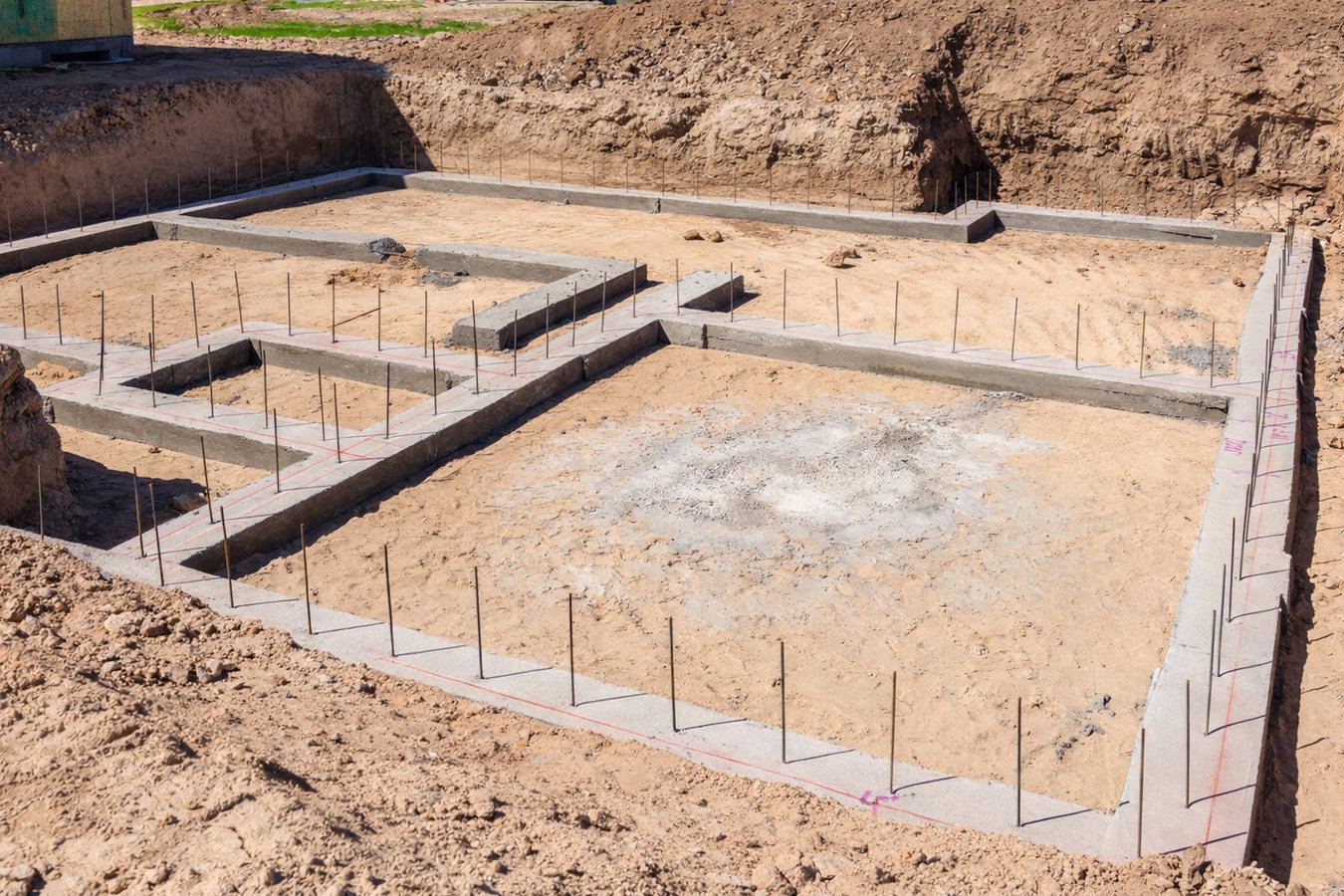
Foundation installation in St. Cloud, MN covers the full process from excavation and forming through concrete pouring, waterproofing, and backfill - most residential foundations take one to two weeks of on-site work, with a total project timeline of four to six weeks when permit approval and inspection scheduling are included.
Most homeowners starting a new build or significant addition in St. Cloud come to us before any framing has begun. Foundation installation is the first major step on any new construction project, and it is also the step where mistakes are the most expensive to fix later. A foundation that was not built for Minnesota's frost depths, clay soils, and spring snowmelt load will start showing problems - cracks, water intrusion, uneven settling - within the first few winters.
Homeowners building a new home sometimes also need a concrete parking lot or driveway poured as the same build progresses - combining those projects with the foundation work saves on mobilization costs and ensures the concrete mixes and base prep standards match across the whole site.
St. Cloud's ground freezes and thaws deeply every winter, and that movement stresses older foundations. If you notice cracks in basement walls that reappear or grow slightly wider each spring, the foundation is responding to frost movement. A crack wide enough to fit a quarter is worth having a professional evaluate - do not wait until water is coming through.
When a foundation shifts or settles unevenly, the house frame moves with it. The first sign is usually a door that drags on the floor or a window with a gap at the corner. This is especially common in older St. Cloud homes where the original foundation has been through decades of freeze-thaw cycles. If it is getting worse each year, the foundation is the place to look.
Central Minnesota gets significant spring snowmelt, and if water is coming into your basement along the base of the walls, the waterproofing has either failed or was never adequate. Occasional dampness might be a drainage issue, but recurring water intrusion points to a foundation problem. Left alone, it leads to mold, damaged belongings, and structural deterioration.
If you stand in your basement and notice a wall curving inward - even slightly - that is a serious warning sign. Clay-heavy soils in parts of St. Cloud push against foundation walls over time. A visibly bowing wall needs a professional evaluation quickly, because this does not stabilize on its own and the consequences of waiting are significant.
We handle the full scope of residential foundation installation - from the first site visit through excavation, forming, pouring, exterior waterproofing, drainage tile installation, backfill, and final grading. Every footing is placed below the local frost line. We pull the City of St. Cloud building permit before any excavation begins, coordinate all required city inspections, and walk you through what was done at each phase before the soil goes back in. Before any digging starts, we call 811 to have underground utilities marked as required by Minnesota law.
Some projects involve more than just the foundation walls. When a new structure also needs a garage floor or interior slab, we combine that work with our slab foundation building service so everything is built to the same frost depth and drainage standard in a single mobilization. This is more efficient and avoids the alignment issues that come from two separately built concrete structures moving at different rates over time.
Best for new single-family homes in St. Cloud where the homeowner wants the added living space and frost protection that a full below-grade basement provides.
Right for homeowners who need access to utilities under the floor but do not require full basement depth - still requires footings below the frost line in Minnesota.
Suited for homeowners adding an attached garage, room addition, or accessory structure to an existing home, where the new foundation must match or tie into what is already there.
A good fit for any St. Cloud project where the lot drains toward the house or spring snowmelt has historically caused basement water problems - built into the foundation from the start.
St. Cloud sits in central Minnesota, where the ground can freeze to 42 to 48 inches deep in a hard winter. That frost depth is the defining constraint for every foundation in this region - footings that do not reach below it will heave every spring, cracking walls and shifting floors over time. This is not a theoretical concern: it is the most common cause of foundation damage in older St. Cloud homes, many of which were built before modern frost depth standards were widely enforced. The American Concrete Institute publishes the technical standards that govern properly designed foundation systems, and our work follows those guidelines on every residential project.
Spring snowmelt adds another layer of pressure on St. Cloud foundations. When 45 inches of accumulated snow melts against still-frozen ground, water has nowhere to go but toward your foundation walls. Exterior waterproofing and perimeter drainage are not optional add-ons here - they are basic requirements for any foundation that is going to stay dry. Homeowners in Sauk Rapids and St. Joseph deal with the same frost and drainage conditions, and we build every project in the area with those realities built into the design from day one.
We ask about your project size, lot address, and timeline, then visit the site to assess soil, slope, and equipment access. You get a written estimate that breaks down excavation, concrete, drainage, waterproofing, and permit fees separately - we reply within one business day.
We apply for the required City of St. Cloud building permit and give you a confirmed start date once it is approved - typically a few days to two weeks. No excavation begins until the permit is in hand and utilities are marked through the 811 call.
Excavation is the loudest phase - expect heavy equipment and a large pile of soil on your property. Once the hole passes inspection, forms go in, drainage tile is installed, and concrete is poured. The pour itself typically takes a day. The forms stay on while the concrete cures.
After forms are removed, exterior walls are waterproofed before any soil goes back in - we walk you through this step before it is buried. Once the city issues final approval, soil is graded away from the foundation and the site is cleaned up. Framing can begin from here.
Free site visit, written estimate, and we handle the City of St. Cloud permit and all inspections. One point of contact from first call to final grade.
(320) 426-1386Every footing we install goes below the 42-to-48-inch frost line for central Minnesota. This is not a generic standard pulled from a warmer-climate code book - it is the actual depth needed to prevent frost heave in Stearns County soil conditions, and the city inspector confirms it at every project.
We apply exterior waterproofing to the foundation walls before any soil goes back in - and we walk you through it first. Once the soil is pushed back, fixing a waterproofing problem means digging everything up again. It is a step we never skip, and we show you rather than just tell you.
The City of St. Cloud requires permits and multiple inspections for foundation work. We handle the permit application, coordinate every inspection, and keep you informed. You should never have to call the city yourself or wonder whether the work has been signed off on.
Any concrete contractor working on foundations in Minnesota must hold a valid state license. You can verify any contractor through the Minnesota Department of Labor and Industry licensing database - it takes two minutes and is the fastest way to screen out unqualified operators on a project this significant.
Foundation work is the part of your project that everything else depends on. We approach every installation in St. Cloud with the same standards: below-frost footings, proper drainage, exterior waterproofing, and city inspections at every required stage - because there is no good way to fix a foundation mistake after the house is built on top of it.
Commercial and residential concrete parking lots poured to handle Minnesota frost and heavy traffic loads.
Learn more about Concrete parking lot buildingPoured concrete slabs for garages, additions, and outbuildings - designed for local frost depth requirements.
Learn more about Slab foundation buildingSt. Cloud's construction season is short and the best contractors book fast - reach out now to secure your spot on the schedule before the ground thaws.