Loading...
Cracked, sunken, or pulling away from your foundation? We build poured-in-place concrete steps in St. Cloud that fit your entry and stay level through Minnesota freeze-thaw cycles.
Concrete steps construction in St. Cloud, MN involves forming and pouring poured-in-place steps custom-sized to your entry using air-entrained concrete and a compacted gravel base - most standard two-to-four step projects take one to two days on-site, with full strength reached after a 28-day cure.
Most homeowners reach us after steps have cracked through, started pulling away from the foundation, or have begun to feel wobbly underfoot. Concrete steps in St. Cloud face the same challenge as any concrete here: the ground freezes more than 150 times per year, and any steps not built with the right mix and a properly prepared base will start showing damage within a few winters. The Cathedral District, South Side neighborhoods, and areas near St. Cloud State University have a large share of older homes where original steps have been patched so many times that replacement is the only real option left.
Homeowners replacing steps often also replace the connecting walkway, which is why many of our steps projects tie in with our concrete sidewalk building service for a complete entry that matches from the street to the door.
Small surface cracks are common and mostly cosmetic, but if a crack is wide enough to fit a pencil tip - or if you can see daylight through it - the structural integrity is compromised. In St. Cloud, water gets into those cracks, freezes, and forces them wider every winter. What starts as a cosmetic issue becomes a safety hazard faster here than in warmer climates.
If your steps look like they have sunk on one side, or if there is a visible gap between the steps and your foundation, the base underneath has moved. This is common in St. Cloud's clay-heavy glacial soils, which shift with moisture and frost. Uneven steps are a trip hazard, and the underlying movement will not stop on its own - it gets worse each winter.
Spalling - when the top layer chips off in flakes, leaving a rough, pocked surface - is often caused by years of rock salt use in winter. This is extremely common on Minnesota entry steps. Once spalling starts, the surface continues to break down and cannot be effectively patched. Replacement is usually the right call when more than a small area is affected.
If a step rocks slightly when you step on it, or sounds hollow when you knock on it with your knuckle, the concrete may have separated from its base or the fill underneath has washed away. This is a safety issue - not just cosmetic - and it tends to get worse after each freeze-thaw season.
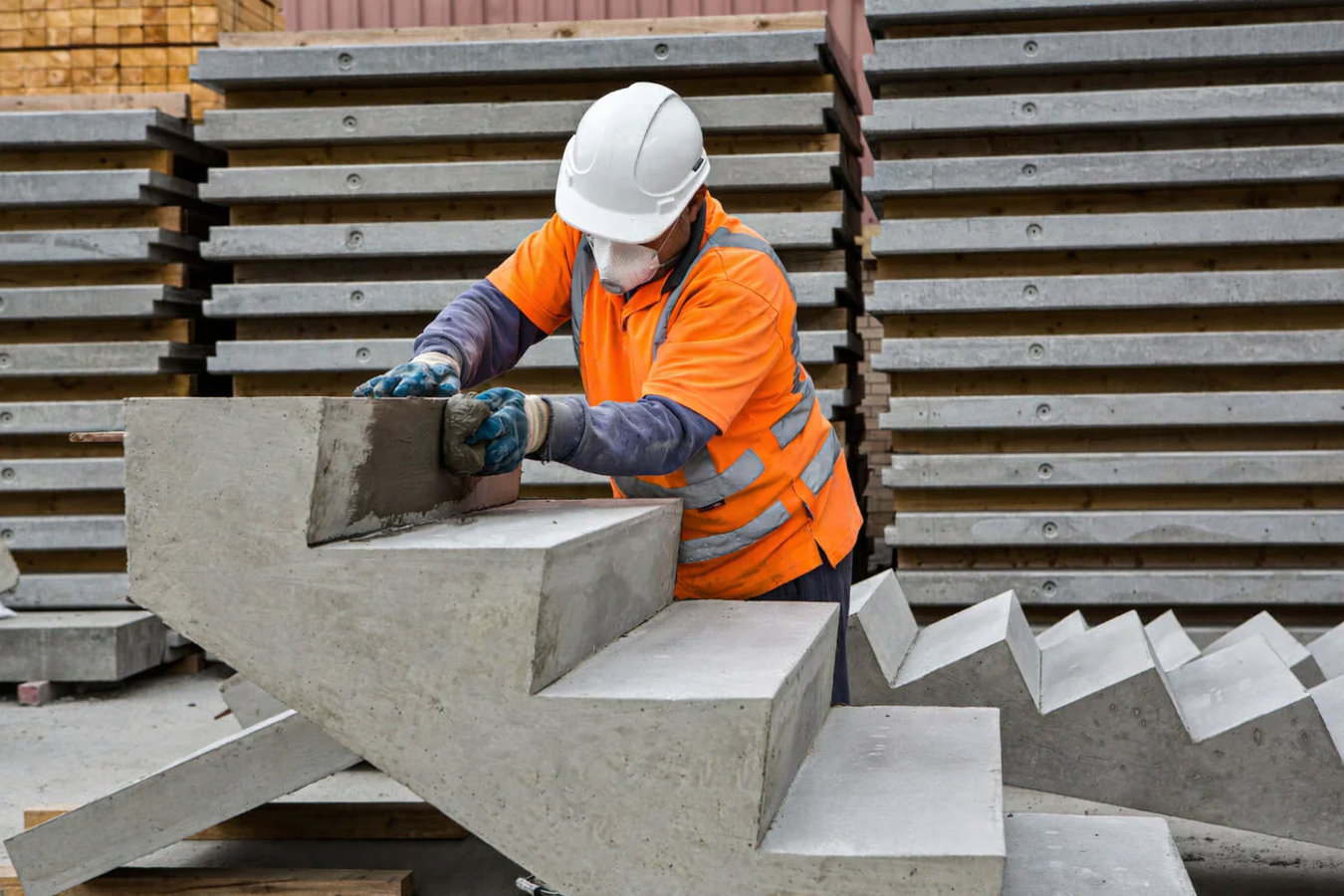
Every steps project starts the same way: we remove the old steps if needed, excavate down to stable ground, compact a gravel base, build the wood forms to the exact dimensions of your entry, and place steel rebar inside before the pour. Using an air-entrained concrete mix is standard for all steps work in St. Cloud - those tiny air pockets in the mix are what allows the concrete to absorb freeze-thaw pressure without cracking. For projects that require a City of St. Cloud building permit, we pull it before work begins and handle the inspection process so you do not have to.
Homeowners who are redoing their entry steps often combine the project with our slab foundation building service when the foundation area near the entry also needs work. Both services use the same frost-depth and drainage standards, so the finished result holds together rather than two separately built structures moving independently over time.
Best for homeowners who want steps custom-formed to match their exact entry dimensions and foundation height - no generic sizing or awkward gaps.
Suits homeowners who need a wider entry platform at the top for space to manage the door, packages, or children - combined with two or more steps below.
Right for homeowners who use a side or garage entry as the primary entry point and need steps that are functional, safe, and hold up through heavy winter use.
Good fit when existing steps have shifted, cracked through, or been patched so many times that a full replacement and new base prep is the only lasting solution.
St. Cloud sees more than 150 freeze-thaw cycles per year - meaning the ground freezes solid and then thaws repeatedly from late fall through early spring. That constant movement is the single biggest reason concrete steps crack and heave in Central Minnesota. Any steps not built with an air-entrained concrete mix and a properly compacted gravel base will start showing damage within a few years. The clay-heavy glacial soil common throughout the Stearns County area makes the problem worse: clay holds moisture and shifts more than sandy soil, which causes a poorly supported step base to settle unevenly over time.
A large share of St. Cloud's housing stock was built between the 1920s and 1960s - particularly in the South Side, Cathedral District, and near St. Cloud State University. Steps on these homes are often original or were replaced with low-quality work decades ago, and patching them is rarely a lasting fix. We work on homes across the St. Cloud area, including Waite Park and St. Joseph, where the same older housing stock and challenging soils create steady demand for quality steps work.
We respond within one business day. We will ask about your entry - the number of steps, the height from ground to door, and whether this is a new build or a replacement - before scheduling a visit.
We measure the space, assess the existing steps, and walk through your options - basic replacement or a wider stoop with a landing. You get a written quote within a few days that covers everything, with no surprise additions when the invoice arrives.
We remove the old steps, excavate to stable ground, compact a gravel base, and build wooden forms to the exact dimensions of your entry. This preparation is what determines whether your steps stay level for decades or start shifting after a few winters.
The pour and finishing typically takes a few hours. The entry will be blocked for 24 to 48 hours while the surface hardens. Before we leave, we walk through the control joints, care instructions, and sealing timeline so you know exactly what to do to protect the surface through its first winter.
St. Cloud's construction season is short and schedules fill fast in spring. Reach out now and we will give you a written price and a confirmed start date with no obligation.
(320) 426-1386St. Cloud sees more than 150 freeze-thaw cycles a year. We use air-entrained concrete mixes on every steps project because that is what the climate demands. Steps built without the right mix typically start cracking within a few winters - steps built with it routinely last 30 to 50 years with basic maintenance.
We pour every set of steps to the exact dimensions of your doorway, foundation height, and connecting walkway. No standard-size precast units with gaps or awkward rises that never quite match your home. The finished steps look like they were always there.
Most St. Cloud entry step replacements require a city building permit. We pull the permit before work begins and coordinate the inspection so you do not have to manage paperwork or chase an inspector. Permitted work protects you when you sell the home or file an insurance claim.
Minnesota requires residential concrete contractors to hold a valid license through the Department of Labor and Industry. We are licensed and insured - you can look us up before signing anything, as recommended by the City of St. Cloud.
Every set of steps we build is formed to fit, poured with the right materials, and backed by a contractor who knows what St. Cloud winters do to concrete that was not built for them. When you call us, you get a clear price, a confirmed schedule, and steps that will not need replacing again in five years.
The University of Minnesota Extension offers guidance on concrete maintenance in cold climates, including sealing schedules and de-icing product recommendations for Minnesota homeowners.
If the foundation area near your entry also needs work, we handle slab pours to the same frost-depth standard as your new steps.
Learn more about Slab Foundation BuildingConnect your new steps to a matching concrete walkway from the street to your door for a complete, consistent entry.
Learn more about Concrete Sidewalk BuildingSpring schedules fill fast - contact us now for a free estimate and a confirmed start date before the busy season is gone.